Google has introduced various initiatives this year with a goal to make eCommerce more accessible to retailers of all sizes. Among the benefits for sellers, the tech giant removed product-listing fees on Google Shopping, and brought free listings to Search as well.
Last week Google announced a series of new changes that included a move to zero Google commission for purchases made through “Buy on Google” (aka Shopping Actions). This means that brands and retailers who participate in the Buy on Google checkout experience will no longer have to pay a commission fee. Effectively, this move will attract a broader range of retailers – and shoppers – to Google Shopping, and help the tech giant better compete against the major players in the eCommerce world.
What this means for you?
If you’re brand new to selling on Google through Shopping Actions, you will be invited to onboard directly to this new 0% commission version of the program.
If your store is already live on the platform, you will be invited to migrate your account to the new version with 0% commission over the next few weeks. Starting July 30, your commission rate will be automatically capped at 5% or less.
Make digital commerce more accessible
In addition, Google will open up its platform to third-party providers, starting with Shopify for inventory and order management and PayPal and Shopify for payment processing. This allows retailers to continue using the tools and services that already work for their business – essentially enabling a smooth transition for sellers, as well as consumers.
To simplify its tools and make them more compatible with merchants’ existing processes, Google is enabling commonly-used product feed formats that allow sellers to connect their inventory to sell directly on Google without having to reformat their data. Retailers will also be able to add product information (like images or technical specs) by pulling from Google’s existing database rather than having to upload it themselves.
According to Bill Ready, President of Google’s Commerce Division, Google has seen a significant increase in demand to buy from and support small businesses, and in order to help people discover these smaller merchants, Google plans to add a new small business filter on the Google Shopping tab.
With zero commission, and simplified onboarding, it will become easier for retailers to sell their products through the Google Shopping program. For consumers, this will eventually mean a larger variety of products available on Google search. As a Google Premier Partner, Mason Interactive is ready to answer any questions you may have about the new changes. Contact us for more information.
On April 21, Google introduced free product listings on the Google Shopping Tab and Shopping Property in order to provide better search results for users. In times like these, when physical retail has taken a hit, we at Mason Interactive see this as a fantastic opportunity for merchants to boost sales.
How does this benefit Paid advertisers?
Benefit 1:
Our paid ecommerce partners that absolutely crush in shopping campaigns will now have the benefit of indexing for “organic” shopping listings.
Benefit 2:
1+1 = 3! Anyone that has been in the PPC game for long knows this is the mantra of advertisers everywhere when it comes to combining the powers of Paid & Organic SEM. Own the SERP, own your brand, gain more efficiency by getting in Google’s good graces.
What should you do next?
Action 1:
If you are not currently using Shopping ads, set yourself on Google merchant. Work closely with your agency partner to make sure all your connections are set up correctly and you are ready to rock! If you are a current Partner of Mason Interactive, don’t worry, you are already set up to start serving on these free listings.
Action 2:
Make a stronger push on SEO for your products. Optimize those titles and descriptions, use the right product tags and make sure you have given attention to your Google category!
Action 3:
Pay close attention to your paid performance over the next month. With Organic coming into the mix that means there will be new competitors in the market. If you give the right attention to Organic for Shopping, you may be able to afford more lenient budgets and automated bidding targets. Remember, if you are indexing for Organic and Paid, you will net stronger results than doing one on its own.
This is an opportunity for brands and marketers. The “free listings” in Shopping are essentially the new Organic listing on the market and will need the touch of an SEO expert.
Do you have more questions on the free shopping listings and what steps to take next? Get in touch, we’d love to strategize with you.
As a Google Premier Partner, we get the latest and greatest information and will update this topic as we learn more!
Mason Interactive is proud to maintain our status as a Google Premier Partner. This designation recognizes us as one of the top 5% of agencies in the United States. Google acknowledges our sophisticated services, commitment to client success, and expertise in using the full suite of Google Adwords offerings, including Search, Mobile, Display, Video and Shopping.
As a Google Premier Partner, we are able to provide existing and new clients with:
Account Planning
When clients onboard with Mason Interactive, they work closely with our Media Director and assigned team as they begin to put together a media plan, strategy and roadmap for their digital marketing efforts. By leveraging the full support of our dedicated Google team, clients can discuss budgets, forecasting, and review campaigns with the knowledge and expertise of our representatives.
Betas
Google is constantly evolving and so are we. As a premier partner, Mason Interactive gets access to Google Ads Beta’s before public release. Through on-site training and online workshops and webinars, our clients have the opportunity to get ahead of the game on new advertising opportunities.
Industry Data
As a Google Premier Partner, we can get you access to monthly and weekly seasonality trends from Google. We know exactly which week demand peaks. Whether you’re looking for top-converting strategies, account best practices and recommendations, vertical trends reports or competitive benchmarks, Mason leverages Google for all of your industry data needs.
YouTube Asset Creation
We work closely with our Google creative team to assist our clients with YouTube video asset creation. At Mason Interactive, we recognize the importance of implementing a video strategy. YouTube has quickly become the 2nd most popular search engine in the world, and 75% of internet consumption will be online video within the next two years.
Issue Escalation
Digital is always on, and having a support team on call is one of the key components to maintaining a successful partnership with your digital agency. Whether it’s Ads approvals, billing and payment issues, analytics tracking or Google My Business support, our Google reps are always here to help.
Being a Google Premier Partner sets us as one of the top 5% of agencies in the US.
We receive exclusive Google product training, we are held to high standards for certifications, and new hires are provided with onboarding support as they begin to integrate into our performance-based process.
Because of our longstanding relationship with Google, Mason Interactive regularly hosts industry events in partnership with Google. Most recently we invited fashion and beauty brands to the Soho Grand Hotel in New York City to learn about Black Friday tactics. View the event recap here.
In March 2020, we will be hosting a Higher Education Marketing Summit at Google HQ NYC. Attendees will get an exclusive look at Google’s latest developments and explore the digital game-changers that help colleges and universities grow enrollments. Secure your seat now.
Having a Google Partner agency assist with your online advertising campaigns can give you the edge over your competition. Get in touch with us today to see how working with Mason Interactive can benefit your business.
Mason’s third fashion marketing event in 2019, in partnership with Google, brought together 50 fashion marketing professionals at the Soho Grand Hotel to explore the best holiday sales tactics.
We saw four inspiring industry insiders take the stage:
Katie Klencheski, SMAKK Studios
Steph Schmidt, Google
Piper Flusser, Walgreens Boots Alliance – Global Brands Americas
Brook Shepard, Mason Interactive
Here are the highlights of the day!
Key trends influencing the holiday sales in 2019
Steph Schmidt, who leads Retail & Shopping on Google’s Performance Agency Team, encouraged the audience to really think about how to make a difference this holiday season and build a strategy that not only brings in new shoppers, but long term business growth. She shared proprietary data from Google to shape the landscape for the season.
Loyalty is replaced by practicality, access and speed
How to succeed as a retailer hasn’t changed, and as always, retailers have to differentiate on one or more of the 5 core levers: price, assortment, convenience, service, and experience. However, loyalty has given way to practicality, access and speed. Consumers can now buy what they need, when they need it and from different retailers. Statistically, consumers are willing to buy from a new retailer, if they have something new and superior to offer across one of the 5 core levers. During the holiday season last year, 51% of shoppers said they were open to purchasing from a new retailer, and 35% actually did.
Get to know your customers
According to Google, personalization can bring you 2x increase in basket size and it is estimated that $800B of the consumer spend will shift to those who personalize in the next 5 years. Simply put, if you are not yet providing a personalized experience to your website visitors, you are likely losing sales. For retail brands, this means continually optimizing for an individual customer experience that is more assistive, such as showing products in their size, or showing products that compliment the products they already purchased from you.
Following the trend, Google is redoing the Google shopping tab to build more coherent shopping experiences. In the new tab everything will be personalized based on products and brands you have searched and shopped. Another development from Google is ‘Shopping Actions’, a one-click-buy model that allows customers to turn browsing into buying instantly. The transaction will take place directly in Google without the need to visit the brand’s website.
Rethink your convenience model
Online retailers such as Amazon are upping the convenience standard. As a result, mobile searches for same day shipping have increased by 120% over the past two years. Steph used Net-a-Porter as an example of a brand who has excelled adding convenience through same-day concierge services. Another example is Happy Returns, a new concept that makes returns less stressful with kiosks around the city providing instant returns. The service handles packaging and sending the goods back to the company, and customer’s credit card will be credited instantly.
Optimize the mobile experience
In 2018 63% of holiday shoppers made a purchase on their mobile phone, whereas in 2017 the number was 48%. When talking about mobile shopping experience, speed has a significant impact. Statistics show that 50% of users would leave the site already after a 3 second loading time and 62% of consumers are less likely to purchase from a brand again after they had a negative mobile experience. According to Google, already 1 second improvement to the site speed can lead to a 20% increase in conversions.
Steph Schmidt from Google
Omnichannel is the future of retail
Even though more and more sales are happening on e-commerce platforms, Steph reminded us of the value of omnichannel where the consumer is being served wherever they are, both online and offline. And digital should support offline. Global in-store sales influenced by a digital touch point has grown 43% from 2004 to 2017, and this number will likely keep increasing.
When asked, most marketing professionals say omnichannel is part of their strategy. However, many brands are still missing a huge opportunity by not measuring the impact digital marketing has on in-store sales. Google data shows that 76% of shoppers who conduct a local search visit the store within 24 hours, and 28% of those searches result in a purchase. Instead of using digital marketing only to spike e-commerce sales, today’s successful marketers also use it for in-store efforts.
The power of storytelling
Katie Klencheski from SMAKK Studios spoke about using smart content to cut through the Black Friday inbox clutter during aggressive Black Friday marketing and skyrocketing Holiday email volume. Due to excessively frequent messaging, email open rates drop 18.8% lower than during non-holidays and the unsubscribe rates skyrocket above average (50-55% increase). Katie challenged brands to take this as an opportunity to break through the noise with unexpected and authentic content.
The power of storytelling matters beyond the holiday season. Katie shared statistics that show a change in consumer expectations towards more authenticity:
8 out of 10 people want brands to tell more interesting stories
85% can’t give an example of a memorable story of a brand
48% of millennials are more likely to buy from a brand if they know the people behind it
72% of millennials would rather spend on experiences rather than on material items
It’s time for retailers to step up their game to tell stories, create experiences and purposeful, impactful content that consumers want to be part of and get personal value from.
Know your superpower
Closing the summit, Brook Shepard, from Mason Interactive, ran a workshop for attendees taking them back to the fundamentals of brand building by asking an important question; what is your superpower? What is that wow factor you can add to your marketing message that creates the “thumb stopping” effect amongst consumers when they scroll down their Instagram feed? Whereas big, established brands are backed with large marketing budgets, smaller brands must make more intelligent decisions to stand against competition.
Thank you to everyone who attended the summit for making it a day to remember!
For more information on how to win the consumer during the upcoming holiday season, reach out to Mason’s digital experts.
We love our quarterly events. The last one was in late January, here in NYC, and focused on growing your Fashion and Lifestyle brand. We were lucky to have Dagne Dover Co-founder Deepa Gandhi with us, a whole host of Mason employees, the incomparable Candace Jordan from Google, and about 100 attendees who braved the 2° weather.
We strive to give real value at these events, and we hope to see you at the next one.
We are happy to have our third Google Summit in the books. We throw these events quarterly, and we strive to give real value to our attendees. This time, we were lucky to have Deepa Gandhi, COO and Co-founder of Dagne Dover, on stage for a fire-side chat.
Thank you to all 100+ attendees for braving the 2 degree weather and coming out. I hope you enjoyed it as much as we did.
Deepa and Candace on Stage at Google on January 31st, during Dagne Dover’s fire-side chat. Adrian Padron, Director of Biddable Media, on stage at Google on January 31st, 2019























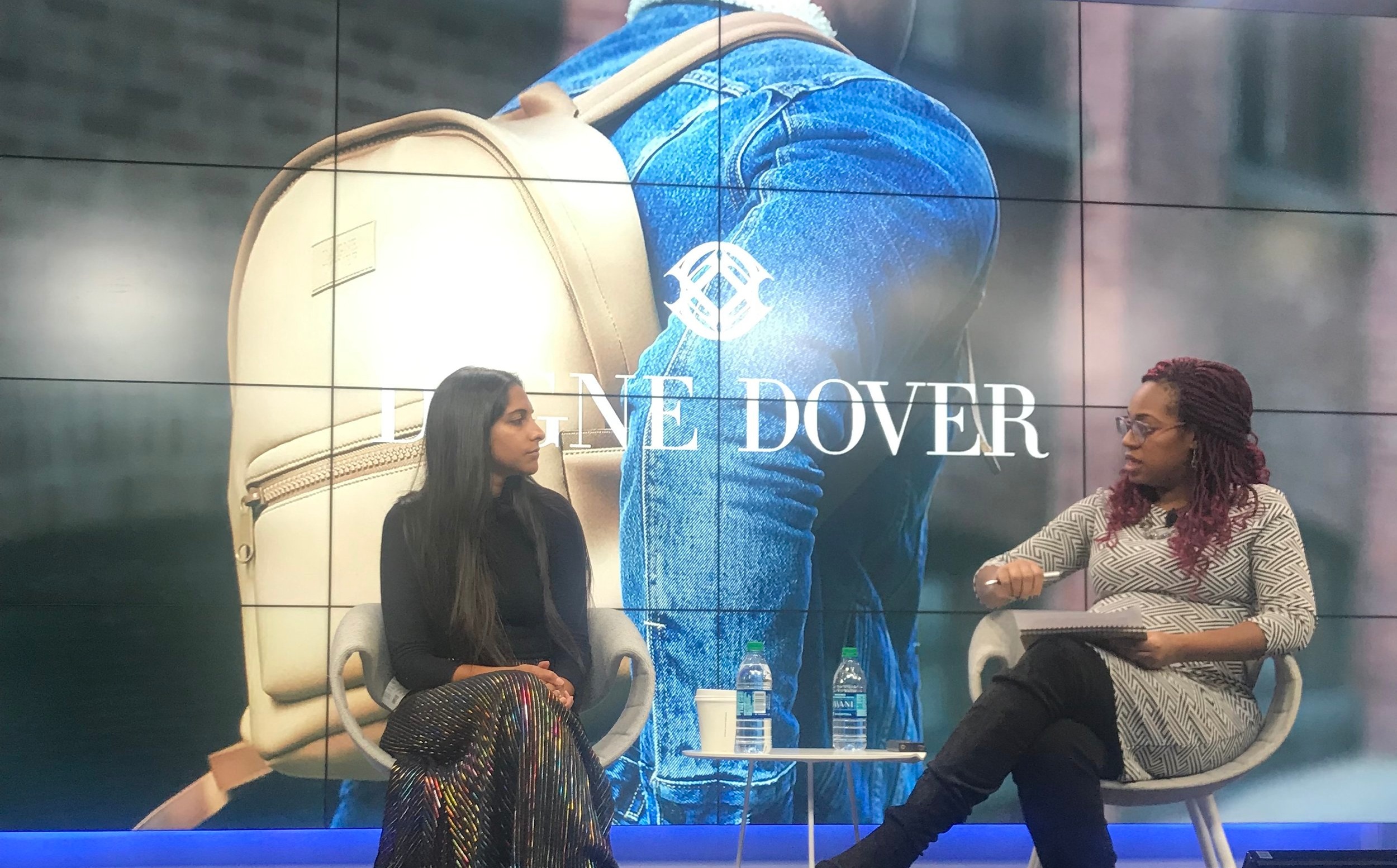 Deepa and Candace on Stage at Google on January 31st, during Dagne Dover’s fire-side chat.
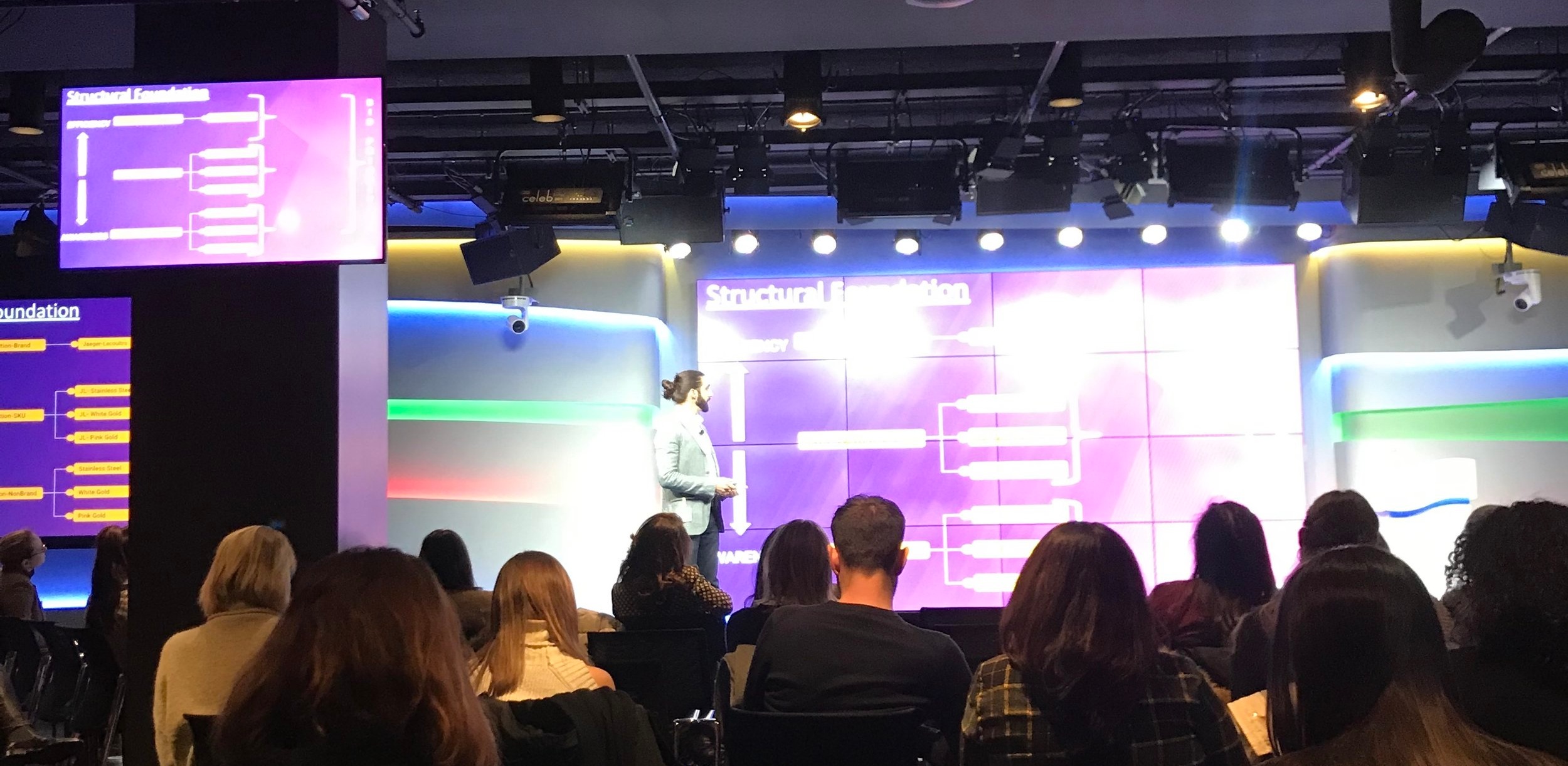 Adrian Padron, Director of Biddable Media, on stage at Google on January 31st, 2019