Mason recently hosted an interactive webinar with Meta to talk about how Conversions API can help to strengthen ad performance & reporting. 

If you weren’t able to attend, or simply wish to relive the session, you can rewatch here.

Why this matters:

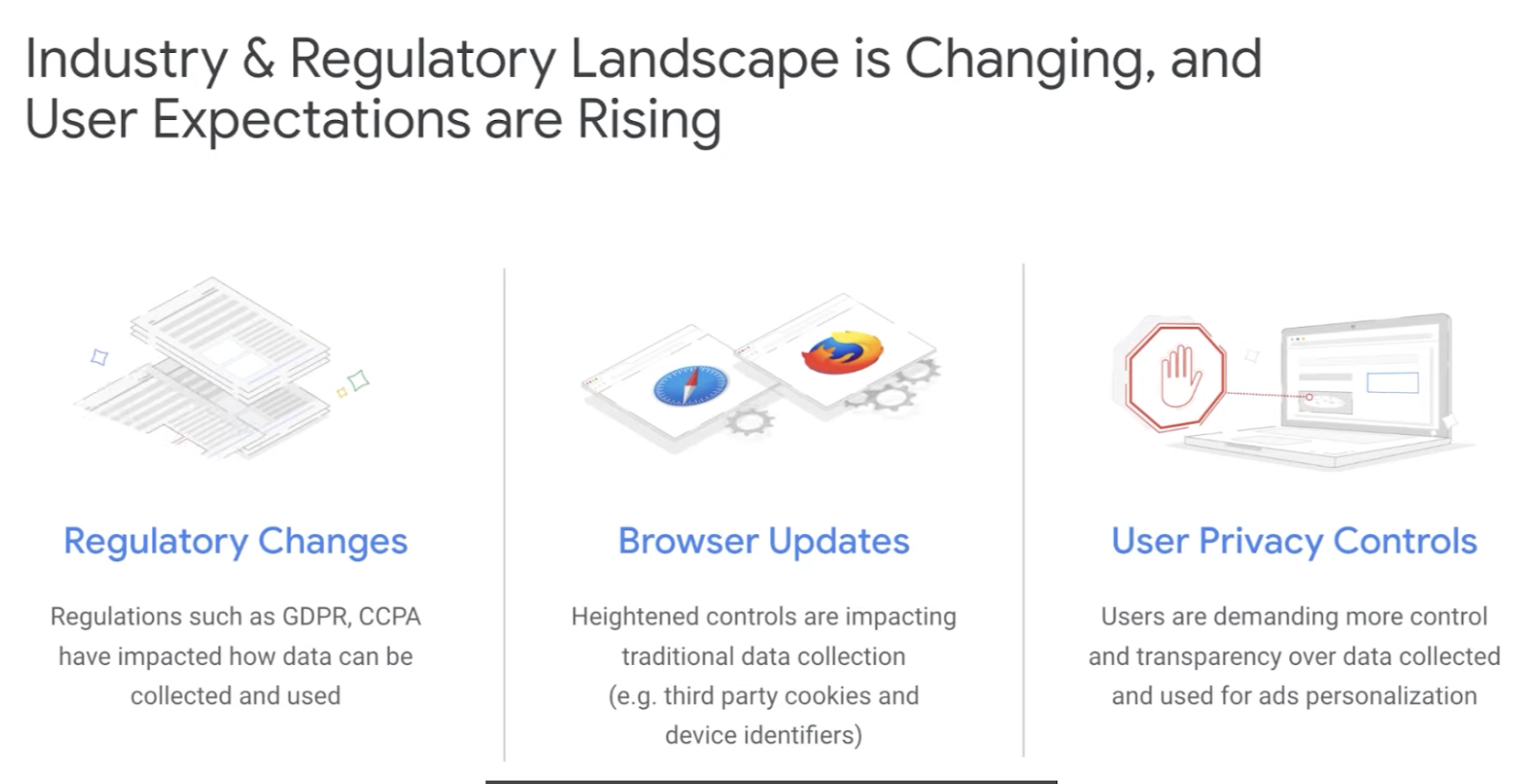
Web browsers and platforms are enacting new policies meant to align with a future without cookies. These changes will weaken insights you’re used to accessing–Conversions API (or CAPI for short) is here to help us navigate around that. 

CAPI is meant to work with the Pixel and as an alternative to the Pixel. What does this mean exactly? Much like GA4, CAPI is meant to work alongside tracking you already have in place in order to collect valuable data you can leverage after cookies are phased out. 

Source: Meta

Should you implement CAPI today?

In short, yes. Without conversion optimization, brands typically see higher CPAs.  

It’s recommended that brands implement CAPI as soon as possible–not only to allow time to onboard technical teams, but also for testing & evaluating the quality of the data you’re collecting. 

For more information on this, access a helpful document from Meta here

Source: Meta

The digital landscape shifts with a new emphasis on user privacy, but it’s still possible to leverage data to reach new audiences and accurately track your efforts. 

Check out the recording of Strengthen Your Brand’s Ad Performance for more information, and if you’re not already a Mason client, you can start your journey here

The 4th generation of Google Analytics is already out, and there’s finally a hard deadline for when you have to completely transition over–July 1, 2023. This post will cover what’s new about GA4 and why you should be thinking about it now.

Analytics that Respects User Privacy

We know that consumers are shopping and engaging online more than ever before following the pandemic. As a result, investing in data & analytics is key to understanding customers and reaching new prospects.

As regulators and platforms evolve how consumer data can be used, people are now able to control/restrict how their data gets used for ad targeting. These are the conditions that have called for a new approach to analytics.

TLDR: GA4 is Google’s answer to a privacy-centered digital landscape.

Why does this matter?

GA4 achieves the same goal as its predecessors, albeit in a different way. 

In our experience, clients like to optimize around metrics like click-through and bounce rates. In GA4, we’ll be thinking more about engaged users vs non-engaged users. Previously, if a user spent 30 seconds on your website and left without clicking anything, that may have been looked at as a bad thing. GA4 will consider a 30 second session an important event to track, even if that user doesn’t click anything. 

GA4 uses machine learning to automatically generate insights from brand data to improve marketing. This replaces the modeled style of tracking from previous generations of GA. See our guide on Enhanced Conversion Tracking to understand this better.

This new generation of GA is meant to be future-proof. It will work with or without cookies so you will still be able to learn about customers even with the identifier gaps that cookies once filled–though you should still be collecting first party data.

New Features

Event editing & synthesis – you can now edit & fine-tune events logged in GA4 within the UI, without writing or adjusting code

Data Import – Track events happening outside of your website/app by sending data directly to GA4. PLUS you can import additional data & signals

Cross-Domain Measurement – Track a user’s journey across domains within the GA4 UI without writing code. You can also use templated reporting to better understand ecommerce funnels.
Migration & onboarding tools – Google understands that most people don’t like change, so they’ve made it incredibly easy to get started with a new GA4 property. There’s a getting started wizard for setup in a few clicks, and you can simultaneously collect data in both UA & GA4. This is called dual set up.

Why You Should Get Started NOW

Simply put, if you want to have QoQ or YoY data the same day that Universal Analytics is out, you’ll want to move over to GA4 ASAP.

There is no way to simply migrate an audience from UA to GA4; it has to be collected by the Google Analytics 4 tracking code. The sooner the GA4 tracking code (and maybe even some basic events and parameters) are configured, the sooner those audiences can grow and be used to support your advertising efforts. 

This isn’t a small task, which is why Google recommends getting started with dual-setup. Tagging all of your pages with both Universal Analytics and GA4 will allow you to continue to benefit from Universal Analytics while beginning to collect data in your GA4 properties. 

If you want to get a head start on your competitors and be ready when cookies is phased out in 2023, Mason Interactive can help you strategize around this.

Related links:

2021’s Spring iOS 14 update (that we discussed last year) disrupted the Facebook advertising ecosystem, and put the need for Platform Diversity into greater relief. 

iOS 14 prompts users to opt-out of tracking; this affects the efficacy of certain (but not all) targeting options.  Bottom line: the FB/IG advertising platform is degraded (we can disagree about how degraded) and brands need to diversify their portfolio by trying new platforms, even if there’s risk there.  Because the alternative, continuing to reply on FB/IG, is even riskier.

Audiences vs Reporting

There’s an open debate about whether the audiences available to brands have changed more than the in-platform reporting on those audiences.  Adrian Padron, V.P of Operations here at Mason, says “Facebook’s inconsistent data has caused dilution of trust. Our clients don’t trust FB’s data. There’s always been a gap between what Facebook reports and the client sees in their CRM, but this gap was usually A) explicable and B) consistent.  Now, it’s neither.” 

iOS 14 update “reduced the efficacy of Facebook advertising and forced people into different platforms.” With audience data now skewed in Facebook, brands move to different platforms to better reach their target audience. Though, a challenge that we see is customers don’t want to change because they like the ROI and if they try new things and don’t see the same ROI they want to pull the plug. 

Most brands are hesitant when it comes to diversifying platforms when they are so used to Facebook, especially when it comes to the ROI they are used to. As Padron adds, “Budgets are a main contributor to clients not wanting to diversify. To get the results you want, you need big budgets per platform. Most clients have a small budget, that if they were split amongst different platforms, would yield no results.”

If clients do not have enough budget to spread, they should re-allocate to SEO. For example, if you have a large social media following try posting about your product or sale. Posts can go a long way for sales. Brands should also have different content per platform. What works on one platform will not yield the same results on another, be empathic to your audience, know what makes them tick, and be specific with your content. SEO will go a long way when it comes to targeting the right people.

When it comes to changing or trying new platforms brands should try it for at least 90 days before they start seeing results. Then try remarketing ads on the same platform. A new platform may be twice the cost but it could yield twice the return. Being patient with new platforms will be key in being successful with them and obtaining the results you want. Another thing to keep in mind is the importance of creative. In the past, AI took poor creative and optimized it to the best it could be. Now brands need creative that cuts through the clutter, resonates, and motivates the consumer to make a purchase with a CTA. Padron adds, “Consumers are used to going on instagram and seeing products they would buy. Which means finding creative outlets to reach people is important. Some outlets people don’t talk about is OTT and OOH.” Find the user in the midst of where they are. Some great examples of brands that have disruptive, creative ads are: Squatty potty, Lume deodorant and Poo-Pourri

The platform Mason has seen the most success with amongst their clients has been with video advertising such as on YouTube and Tik Tok. As Padron notes, “We started pushing people to Google to diversify, as well as TV impressions and TikTok. We thought the most success we have seen thus far has been with video based advertising platforms. YouTube is the number two search engine with Google being the first. Video ads receive more views, more click-through-rates, and more engagement than other ads. Though not any video will obtain high ROI. Video ads must be tagged, well titled, have good SEO, and that are structured well.

Conclusion

Folks in the office often hear me say that we can’t choose which platforms our customers are on. To survive, you have to get creative and invest in exploring new places to find your customers.

You do not have to be alone when it comes to planning and strategizing for new platforms. Let us help diversify your marketing efforts to increase your sales, reach new audiences and expand your brand awareness. We are here for you!

First party data refers to user information collected from direct interactions with your brand (email, site, app etc). Owning this data should now be an essential part of your marketing strategy–especially as platforms prepare to sunset 3rd party cookie tracking.

Today’s consumers are shopping online more than ever before, but they’re also more protective of their data than ever before. Despite the increase in user activity, it’s getting harder to tell who these users are and which are most likely to be interested in your products.

Apple’s new iOS privacy features allow users to refuse data tracking. Facebook & Google are moving away from 3rd party cookies. Changes like these mean that it’s up to your business to collect the data you need to understand who your customers are and which acquisition channels are the most effective.

In other words, you need to start collecting first party data.

Understanding First Party Data

Consider first party data the foundation of your marketing strategy from this point on. Since most sites won’t be able to collect the key identifier data, it’s on your business to collect it from your customers and prospects. 

Asking users to share your data is challenging, but it’s much easier when the user has an established relationship with your brand. Therefore it’s incredibly important to build trust with your customers in order to collect first party data.

Want Proof? Nike Just Did It

Nike’s share price shot to an all-time high in 2020 thanks to its customer-centered DTC strategy.

The company couldn’t utilize its network of over 900 global stores in the midst of the pandemic, so it instead leaned into what it called a “Consumer Direct Offense”.

“[In] a future increasingly defined by e-commerce, fast-moving trends and, above all, the rising power of branding to drive consumer preference when competitors are just a click away, Nike realized that in order to thrive, it needed to take control of its distribution to better manage its brand and deepen its connection with consumers.”

Inside Nike’s Radical Direct-to-Consumer Strategy, Business of Fashion

Mapping the Customer Journey with First-Party Data

Connecting with your loyal customers is critical, and every single step of your customer journey should be optimized with that in mind. Here’s a helpful video on building trust with your customers and why that matters:

  • Improve targeting precision
  • Improve omnichannel measurement 
  • Drive ad relevance 
  • Close the loop on attribution
  • Create a single view of the customer

We’re currently helping our clients prepare for the cookie-less future. Here’s how we can help you too:

  • Make a roadmap for your first party data
  • Determine the right data sources and data points
  • Benchmark and monitor over time 

Picture your eCommerce site as a physical store. Now, imagine your wholesale retail buyers as the businesses next door. Sure your products get sold either way, but you still want to make the sale yourself, right?

Small and medium-sized D2C brands often depend on third-party retailers for exposure to larger audiences. However, the risks include not only loss of revenue, but the opportunity to capture the first-party data needed for future sales & growth.

This is not to say that it’s a bad thing to sell your products through a larger retailer, that’s great!

However, when high-intent users directly search for your brand, you should rank higher than your retailer.

In fact, you lose big time when you don’t.

Ex: A direct search for Hamilton Dress Shirts gives 5 results for 3rd party retailers & none for the actual brand.

The right media strategy puts you in a position to make the sale and capture the first-party data you need to succeed in today’s digital landscape. The wrong media strategy surrenders sales opportunities to retailers that bid for on brand terms.

Here are a few things to think about when balancing your DTC & B2B strategies.

What’s at Stake

A few things happen when a retailer ranks higher than you on your terms. For one, they have a better chance than you to win sales. With that sale comes the opportunity to collect the customer’s first-party data, which means you won’t be able to directly engage your most likely buyers via social media, email, ads, and more. This doesn’t just affect prospect customers. First-party data can help drive brand loyalty & future sales, and you’d lose out on that too.

Going forward it’s going to be incredibly important to build authentic relationships with your customers, and it will be harder to do if you’re not appearing in direct searches.

Stop competing against yourself

It’s entirely possible to balance your B2B relationships while owning & growing your own customer base. 

At Mason Interactive, we have 13 years of experience working with DTC brands that also have a physical retail presence. We can help optimize your media strategy so you can capture your most high-intent prospects. Set a meeting with us today to learn more.

It has never been more important to understand who your potential customers are. As the industry shifts towards focusing more on consumer data privacy, it’s getting harder to track and measure prospective buyers.

As an agency, we’re staying ahead of the curve so that our clients can succeed despite the coming impact. 

Source: Tech Times

We recently attended a company-wide training session with our partners at Google to discuss the future of privacy-centric measurement. This post will cover how you can explore unique implementations of Google’s Enhanced Conversion Tracking protocols.

Don’t know where to start? Send us a message to discuss what this means for the future of your business.

What is enhanced conversions?

Enhanced conversions is a feature that can improve accuracy when it comes to measuring conversion. It supplements existing conversion tags by sending hashed first-party conversion data from your website to Google in a way that still protects user privacy.

The feature uses a secure one-way hashing algorithm called SHA256 on your first-party customer data before sending to Google. The hashed data is then matched with signed-in Google accounts in order to attribute your campaign conversions to ad events, such as clicks/views.

Simply put: Say goodbye to Observed conversions, and hello to Modeled conversions based on hashed data.

Implementation

There are 3 approaches to implementation: manual (preferred), automatic tag based, and API. Once implemented, Enhanced Conversions will start working immediately, however, 60% of data can be missed if Enhanced Conversions is not applied correctly. We can help you with this.

The next generation of Google Analytics – GA4 (Google Analytics 4) has been rebuilt to include more capabilities, including predictive modeling, attribution, and LTV modeling. Once implemented, it will take 12 months of data for features to accurately model. Speaking of which…

First Party Data is Priority #1

About 80% of advertisers depend on third-party cookies. Without them, those advertisers will need to find a new way to reach their customers and prospects online. User’s behavioral and browsing data will be limited. If you depend on third-party cookies it will be significantly harder to personalize ads, A/B test, and gauge attribution.

We’ve said it before and we’ll say it again: There is nothing more valuable than owning your first party data. Whether you have been in business for years, or are just beginning your digital journey, now is the time to evaluate what this data means to your holistic ecosystem. Enhanced Conversions will capture all email addresses, including non-gmail addresses, but keep in mind that only conversion data will be recorded.

Plan for the Future Today

Google announced that third-party cookies will be deprecated by the end of 2022, or early 2023 at the very latest. 

This industry-wide change is not going away, and we encourage you to be proactive today so your business has time to adapt to new industry standards and best practices. There’s a lot to be done, so if it seems overwhelming, schedule a meeting with one of our experts today.


Glossary:

Third party cookies: Third-party cookies specifically are created and placed by websites other than the website you’re visiting. Some common uses include cross-site tracking, retargeting and ad serving.

First party cookies: First-party cookies are generated by the host domain. They are usually considered good because they help provide a better user experience. These cookies enable the browser to remember important user info, such as what items you add to shopping carts, your username and passwords, and language preferences.

For an example, let’s say you visit a website called learn.com. Any cookies put on this website by learn.com would be first-party cookies. Any cookies put on learn.com by any other site, like a social media site or an advertiser, would be third-party cookies.

Identity Resolution Providers: The process of matching identifiers across devices and touchpoints to a single profile — helps build a cohesive, omnichannel view of a consumer, enabling brands to deliver relevant messaging throughout the customer journey.

Cross-site tracking: The practice of collecting browsing data from numerous sources (websites) that details your activity

Retargeting: Using search activity to retarget visitors with visual or text ads based on the products and services for which they’ve shown interest

Ad-serving: Making decisions regarding the ads that appear on a website, deciding when to serve these ads, and collecting data (and reporting said data including impressions and clicks) in an effort to educate advertisers on consumer insights and ad performance.