


















We are lucky to work with the CIA (Culinary Institute of America) which, for reasons that will become clear, I will refer to as “The Harvard of cooking schools.”

We work with them across platforms and tactics, and this means that we have the ability to run multiple tests.

On one such test, we’re A/B/C/D testing taglines ONLY. Ad copy, layout, images, body text – everything else remains the same.
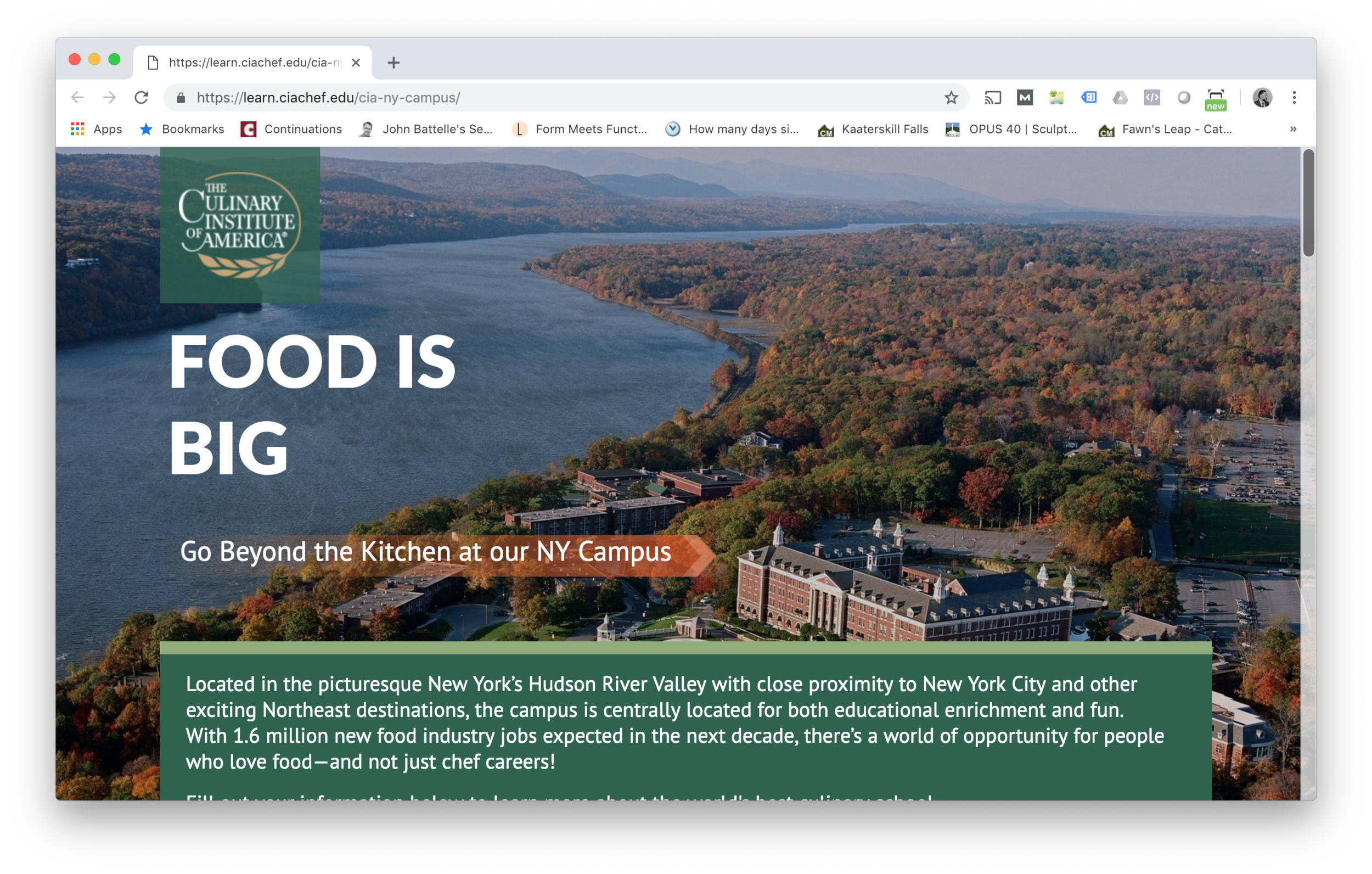
 This is the Challenger Page, the original we inherited and are improving via testing. This is the Challenger Page, the original we inherited and are improving via testing.

The control here is the “hero” tagline, “FOOD IS BIG” – that’s our baseline. We’ll say that’s pH Neutral, neither good nor bad. Let’s label it “zero” and measure up or down from there.

Now, this campaign’s goal, is to get potential students to inquire (and then apply, and then enroll.) So let’s call an inquiry – a student filling out his information and asking for an admissions counselor to call him – a “conversion.”

We are testing “FOOD IS BIG” against these challenger taglines:

  1. STUDY ON THE HUDSON

  2. CIA is “the Harvard of Culinary Schools.” -Julia Child

  3. CIA is the best Culinary School in the World

I’m not going to give away CIA’s conversion metrics – I’m not going to tell you if the original FOOD IS BIG page converts website visitors into inquiries at 2% or 5% or 20%, but I will share how these 3 “challenger” taglines compare to the original.

And the results are striking. Challenger #2 – the one calling CIA the Harvard of Culinary Schools – converts almost 5% better. This means that for every 100 people that visit this website page, CIA will get five more inquiries.

5 more students is a big, important, serious number. If your agency isn’t testing taglines, please give us a ring 🙂
Tagline Testing Affecting Conversion Rate

Search Engine Land brings news about a new Google Initiative. In brief, Google Ads reps are about to start making changes to advertiser accounts. Unsolicited changes. I guess this is an immediate direct threat to Yodle or Reach Local.

Why would Google do this?

To make more money: I’m sure they have data showing that actively managed campaigns, spend more than non-actively managed accounts. So I am not surprised that Google is intervening more in advertiser accounts. I am surprised that they are using humans to do this.

Google has been relentless about automation in their advertising platform:

  1. Ad copy is now much more automated than I ever thought possible.

  2. Ad units – actual graphical ads – are being automated via Smart Shopping Campaigns that do perform well but are ugly.

  3. We, as an agency, are partially judged by what % of our clients use Google’s bidding automation tools.

  4. Google says outright that keyterm buys will eventually be sunset, and that we’ll all let Google’s algorithm decide where/what/when to run our ads, and in what units.

So it is a bit of a surprise to see Google saying some version of “key, automation is still great, it’s still coming, but now here’s an additional human layer, too!”

We here at Mason have the following observations about this:

  1. A low-level google trainee out of Detroit – because that’s who will be making these changes – should not be acting unsupervised on your behalf. They can’t know what your goals are.

  2. Contextless changes – because a Google-only view that doesn’t know what’s going on with your Radio, Instagram and Facebook efforts, lacks context – should not be acting on your behalf. They can’t see the whole picture.

  3. Google has a habit of rotating reps off of accounts after 6 months – which means that you, a small business, will have to re-educate these remote, low-level employees, twice a year.

We will be opting our clients out of these efforts.

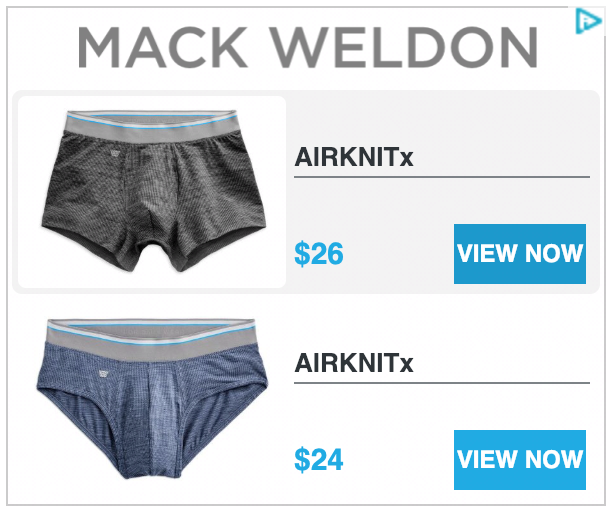
 This is an example of a Dynamic advertising unit, created by Google Smart Shopping Campaigns. Clients - especially upscale clients - do not like these, because they don’t highlight the brand very well. We like these ads - and I’m sure Mack Weldon’s agency likes them plenty - because they simply out-perform. This is an example of a Dynamic advertising unit, created by Google Smart Shopping Campaigns. Clients – especially upscale clients – do not like these, because they don’t highlight the brand very well. We like these ads – and I’m sure Mack Weldon’s agency likes them plenty – because they simply out-perform.
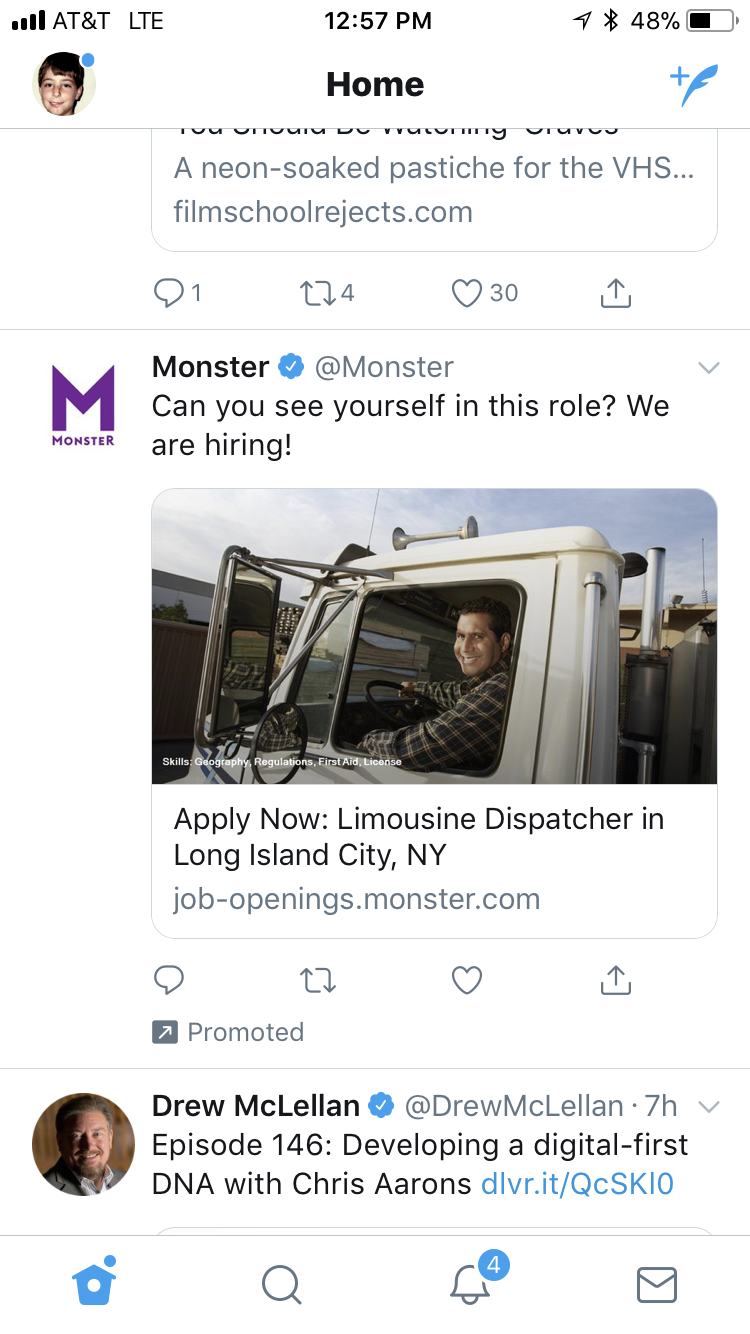
Our job is to be an ally for our clients.  We can be tactical/executional allies (Dear Mason, please update these 6,000 links by end of day) we can be Strategic allies (Hey Mason, we want to increase Back Friday sales by 3X over last year – let’s align on a plan to show the board) and we can be both.  I think we offer more use as strategic partners than as execution-based allies, but that’s a discussion for another day.

This Monster ad, above, fails on both levels*.

Tactically/Executionally,  this is really bad targeting.  There’s plenty in my twitter feed to suggest that I might open a record store, or run for city council, or open a bar, or book concerts at small punk clubs, but nothing to suggest that I might become a limo dispatchure**

Strategically it’s bad because it will not bring them more money.  This is a wasted effort in man-hours, media spend, and reporting time.

I’d expect any client we did this for, to call me angrily ASAP.

* FYI, we work with a competitor of Monster’s.

** I drove a yellow cab here in NYC after college, and am in no way above driving for a living then or now.  I’m just not a good demographic fit for this ad.

Thank you Facebook for hosting us (and a few dozen other agencies) to talk about new video product offerings.

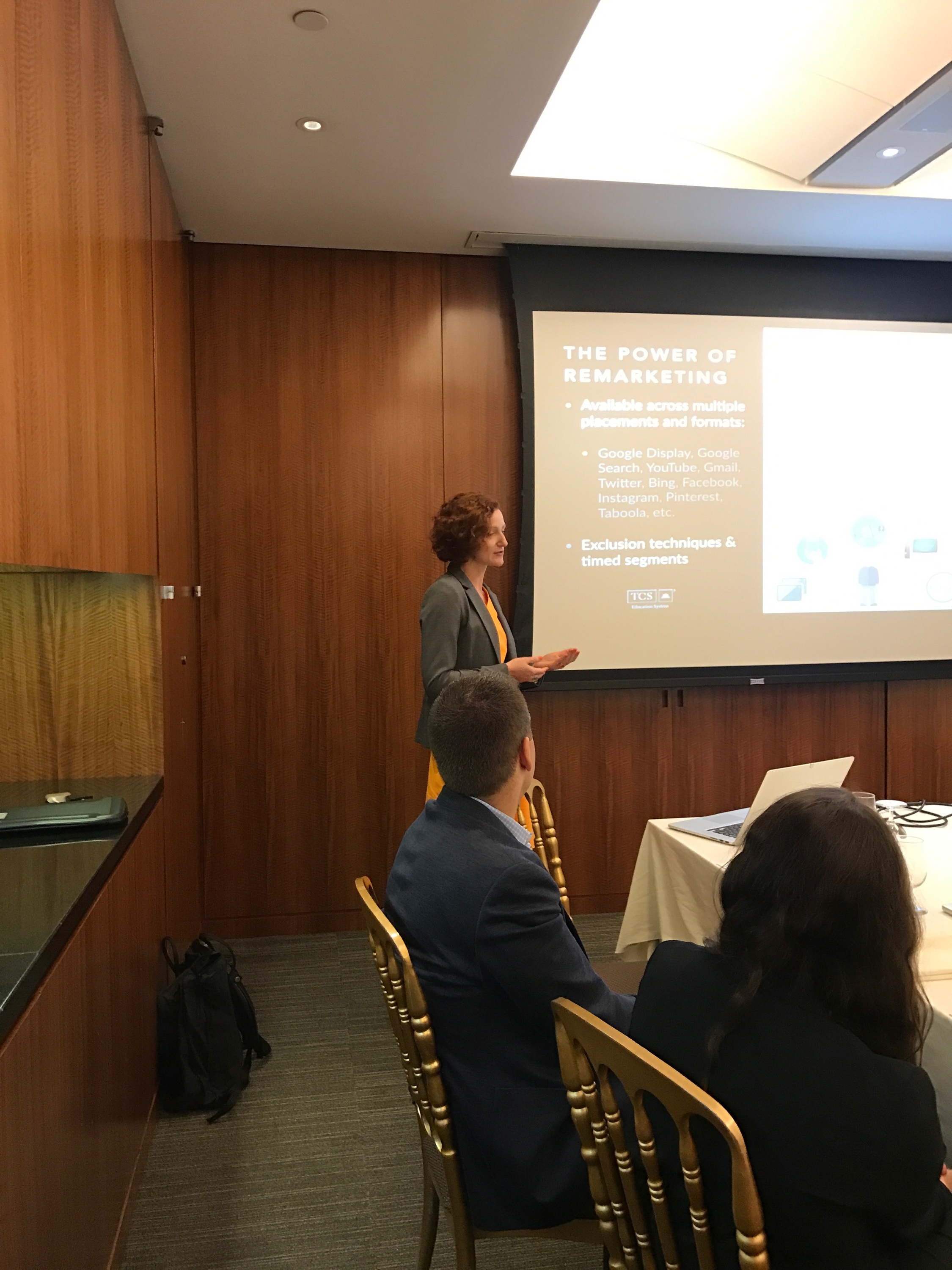
On Tuesday Oct 10th, at the Princeton Club on 43rd Street, we spoke (along with Sparkroom and Google) to the board of TCS Ed System regarding the State of Digital Marketing in Higher Education.

We started at 9:00, when Rachel Schulties from Sparkroom talked about trends in big data.

Google spoke at 11:15.  Aurora Vintilescu wowed everyone with insightful data and analysis.

We closed out the day, giving context to the changes.  As usual, Ms. Julie Eydman was the best.

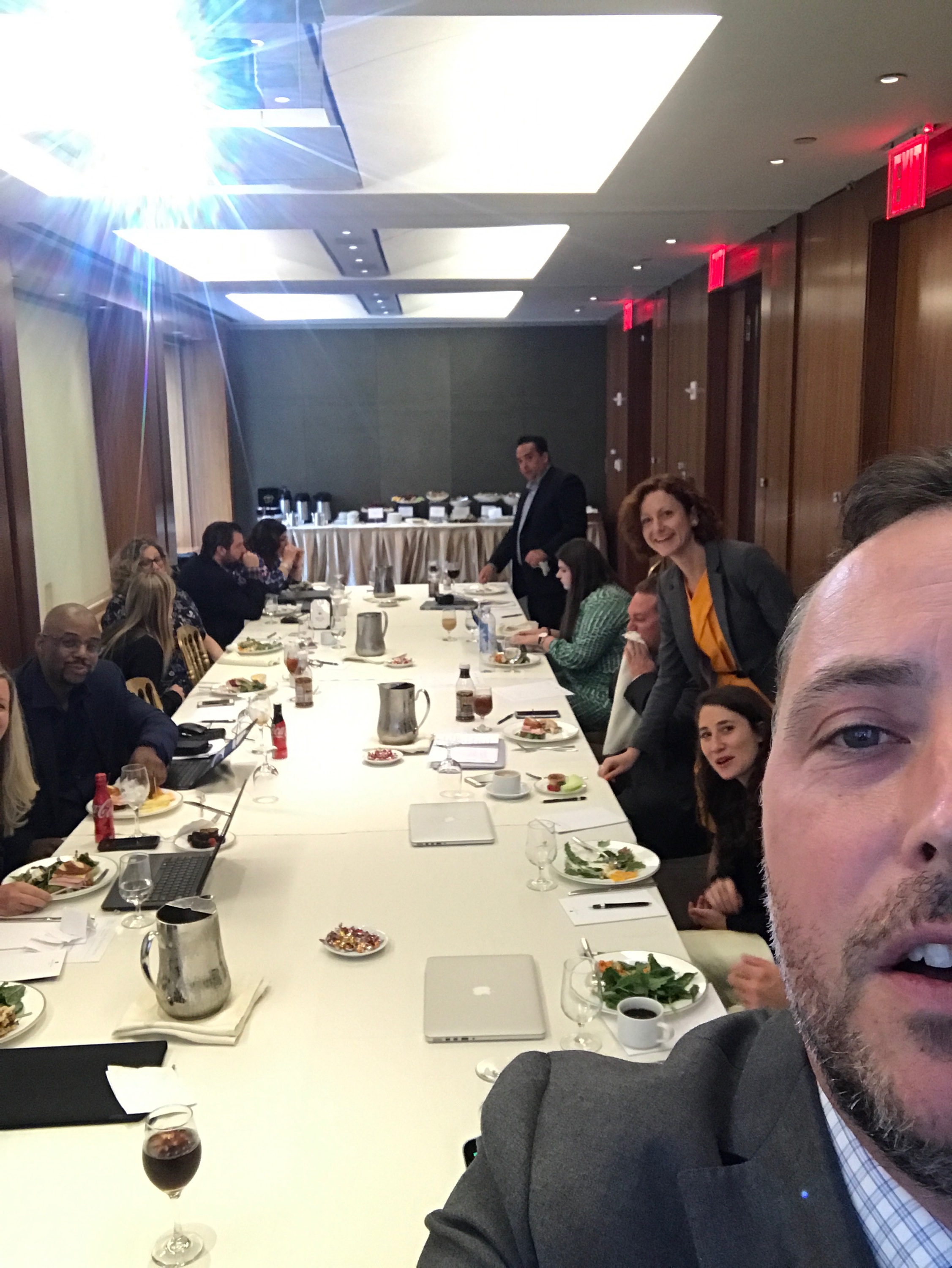
 Obligatory selfie Obligatory selfie Julie doing her thing. Julie doing her thing.

About the blurring between native advertising and content: Here’s a screenshot of the New York Daily News from this AM. I was 100% certain that “What is Nissan Predictive Collision Warning” was a sponsored post, because honestly, how could it not be? But a quick click through to the next page shows that it’s an actual article. This can’t be good for readers, the paper’s bottom line, or Nissan.