


















Following the coronavirus outbreak, many businesses have pulled out their budgets and cancelled media buys. As a result, today’s advertising space has become less competitive. Concurrently, ecommerce might see a boost as consumers spend more time online.

We wanted to take a deeper look on how this new environment impacts our clients and what are the best practices to optimize advertising.

To get a better sense of the market as a whole, we pulled together data on CPM and conversion trends, and general changes in the market within the last month. The data comes from all of our media clients, across their Google, Facebook, Instagram, and Youtube ad accounts.

Check out the video below for a full analysis by Mason Interactive CEO, Brook Shepard, and Director of Media, Adrian Padron.

Our advice for Direct-to-Consumer brands

After a drastic spike two weeks ago, when many brands paused their campaigns, we are now seeing brands taking action again and returning back to the market. Many are testing new promotions and offers to fill the gap in the cash flow.

Lower CPMs provide a great opportunity to get in front of your audience with less cost than usual. Consider shifting strategies, especially if your brand has a healthy cash flow, and you are not focused on driving sales right now. Think how you can get in front of the audience with quality content, and brand stories that create personal experiences with new consumers. This helps to re-engage with them after the market normalizes.

Take this time to work with your agency to revise strategies and messaging, optimize your media mix and think about post click experiences. Don’t focus just on revenue, instead make personal connections with consumers.

Our advice for Higher Education Professionals

Research and historical examples have shown that whenever the economy gets rocky, people look to return back to school. Some of our education clients provide nursing programs, which in particular have gained increasing interest during the pandemic. Online programs are equally trending when people spend more time at home.

We are seeing a clear downward trend in CPMs with our higher education clients. We can now get a lot more with the same budget we had in place pre COVID-19, and, most importantly, we can get in front of more students with a lower cost.

While the CPMs are dropping, the data presents huge upward spikes in CVRs. We believe conversion rates will continue to rise when the time spent online keeps increasing, and as a consequence, the search volume grows. If you are a higher education marketing professional, use this opportunity to expand your reach.

If you could use a little help with optimizing your advertising strategy in this current environment, schedule a free consultation with us.


Marketers all over the world are forced to to rethink their strategies, pause campaigns and even delay new launches as a result of the coronavirus outbreak.

Thankfully, digital advertising allows us to adjust quickly. We listed some ideas for you to use in this new landscape where shopper intent is changing day-by-day.

1. Drive ecommerce

Household needs don’t go away and may even increase with stockpiling and panic buying. Concerns surrounding shopping in public places have driven consumers online – whether buying CPG goods, groceries or even apparel. Make sure to position targeting and messaging to capitalize on that consumer behavior.

“COVID-19 Concerns may boost ecommerce as consumers avoid stores”

eMarketer

2. Invest more advertising spend on branding, not less

When other brands pull back, you can increase your share of voice at a much cheaper cost because there is less competition for attention and ad inventory. Creating a branding impact will have a halo effect and pay off when the market normalizes.

3. Test different promotions

One of our clients used to offer free shipping for orders of certain value. Now, they offer free shipping on all orders. Another client extended free shipping for their friends and family. Both saw immediate results.

4. Revise your live campaigns, ASAP

Edit your ad copy as needed to let customers know if you are offering services like express shipping, or targeted promotions to loyalty customers. Pause campaigns promoting unavailable products that may have been impacted by supply chain issues.

5. Keep a close eye on your budget

If the cost of acquiring new customers is too high right now, remarket to past website visitors or re-engage existing customers through email. If you can see an increased interest in a range of products, focus on that.

6. Follow your audience

The foundation of any successful marketing strategy is knowing where your audience is. And at the moment they are all buying hand sanitizers and toilet paper from Amazon.

7. Incorporate more video to the mix

Time typically spent on sports, with friends, at theaters and restaurants, etc. is now shifting to watching videos and TV at home. You can capture a huge portion of those users on YouTube, a significantly cheaper advertising channel than TV.

8. Be human

This may be a time to shift away from traditional campaigns and engage with customers through social media. Can you add value to people stuck at their homes? Think about how-to videos, recipes, and virtual workouts. Most importantly, maintain excellent customer service and a seamless online buying experience.

It’s a lot to take in, regardless of whether you are a marketing team of 1 or 20. If you would like help steering your ship during this turbulent time, let’s chat.

Social media is changing for advertisers and users – knowing what’s to come and how it will affect the digital marketing industry is only half the battle. Adapting to changes and maintaining industry standards is what Mason Interactive is constantly evolving to do.

The way we think about Facebook in the advertising world varies significantly from the way the platform is perceived by the consumer marketplace. In a world where businesses are forced to either invest in social media marketing or risk falling behind their competition, everyday users are plagued by the Cambridge-Analytica scandal, data privacy woes and the saturated landscape of advertising across platforms.

As advertisers, we are constantly evolving in an effort to find new ways to help our clients reach their goals, whether it be driving sales, acquiring new customers, or ultimately increasing the rate at which people convert into quality customers and/or students (leads). While creative, strategy and optimisation are buzzwords we hear all too often, the challenges that arise as a result of changing consumer behaviors is something that even Facebook can’t keep up with.

The Past Decade

When Facebook acquired Instagram back in April 2012, the social media advertising world was still in its infancy. Over the course of the last eight years, Facebook, which has since acquired WhatsApp, introduced new features in an attempt to reel in revenue from businesses and keep users engaged. Algorithms, influencer marketing, Messenger and a new focus on shopping have changed the way people use the platforms that were initially developed as a way to connect with friends, family and communities.

As we prepare to enter a new decade, both advertisers and consumers should be conscious of what will become of the social media giant that has, in many ways, become an integral part of the way we connect, engage and consume. Users are no longer using social media to simply ‘Like’ a Page for discounts. Facebook has become an essential part of the consumer journey.

Interested in evaluating your social media marketing strategy? Submit a request for a free Marketing Analysis and let’s discuss your 2020 goals.

What’s to Come

While we can only speculate what changes to expect in the future, the push that Instagram is making towards removing ‘likes’ as a way to combat mental health issues only begins to scratch the surface of the impact these changes will have on the future of online advertising. If agencies, brands and users have been recognized based on their engagement, follower count and creative content, we can imagine the shift that will take place to compete for eyeballs and clicks.

Through these recent changes, Instagram could be hinting at their first attempt to take influencer marketing into their own hands by moving towards an agency database strategy. With access to the user data and analytics of billions of users, it wouldn’t be surprising that they could someday soon leverage this data to their own benefit.

Working with brands to access this data as a way to market to consumers, while also owning the ability to control the marketplace, is something that some believe Facebook should have done from the very beginning. This could give advertisers a new opportunity to reach potential customers, while working alongside brands in a personalised way. On the other hand, some would say that this notion works almost entirely against the data privacy and protection efforts that have been made over the past few years.

As these changes begin to take effect in the new year, user experience will be affected – but perhaps it isn’t such a bad thing. If we can expect that brands will be held to higher standards, and the relationship between agencies and platforms will be more transparent, then maybe social media will be valued in a way that has not been seen before.

This article is written by Ashley Bruzas, Digital Account Strategist at Mason Interactive.

Digital marketing is like online dating, and you need to know how to play the game to stand out from the crowd. We’d like you to think of your website as an online dating profile. Your product might be wonderful, your website well-designed and your customer service is exceptional. But if your customers can’t find you, all of your hard work may never come to life.

Turn your website into a lead magnet with these digital marketing tips!

1. IDENTIFY WHO YOUR IDEAL MATCH IS

There’s plenty of fish in the sea, but don’t waste your time going after them all.

Know your audience, where they are and what they are looking for.


2. BE SPECIFIC ABOUT WHO YOU ARE

“I love traveling and being with friends.” Well, who doesn’t!

Don’t just say you sell ‘shoes’, instead catch the consumer’s eye with ‘women’s designer heels’.


3. DON’T HIDE BEHIND PUPPY PHOTOS

Nobody likes surprises when meeting up in real life.

Show a realistic view of your products with good quality imagery.


4. DON’T GHOST

Playing hard to get can push customers into competitors’ arms.

Make it easy to start a conversation with you and reply enquiries promptly.


5. NO STALKING

Bombarding consumers with daily emails and remarketing ads is a definite turn off.

Create a subtle flow of communication to remind them you care.


6. SPLIT THE BILL ON THE FIRST DATE

It’s a date! But they can still escape through the window if you don’t give a good impression .

Encourage them to hit the purchase button by providing an irresistible offer.


7. EMBRACE LOYALTY

It’s no secret your customer is probably dating other brands at the same time.

Turn the fling into a true romance with a customer loyalty program.


Looking to take your SEO to the next level? Check out Mason’s SEO matchmaker package here.

According to Facebook, Calibra is “A New Digital Wallet for a New Digital Currency.”

Calibra’s… goal is to… let people access and participate in… Libra, a new global currency powered by blockchain technology. The wallet will be available in Messenger, WhatsApp and as a standalone app — and we expect to launch in 2020.

From the beginning, Calibra will let you send Libra to almost anyone with a smartphone, as easily and instantly as you might send a text message and at low to no cost. And, in time, we hope to offer additional services for people and businesses…”

I’ll bet.

Also, it’s a handy way for Facebook to get a slice of the ≥ $30bn annual in fees from credit card processing.

Credit cards charge about .25% of every transaction to the merchant. So if I buy $100 of Nikes off of a Facebook ad, American Express keeps $2.50. Nike pays that fee. With Calibra, Facebook can keep that $2.50 – or Facebook could reduce their margins to, say, .1%, making every single retailer on Earth, by default cheaper on Facebook and/or Instagram. That sounds like a move against Amazon to me.

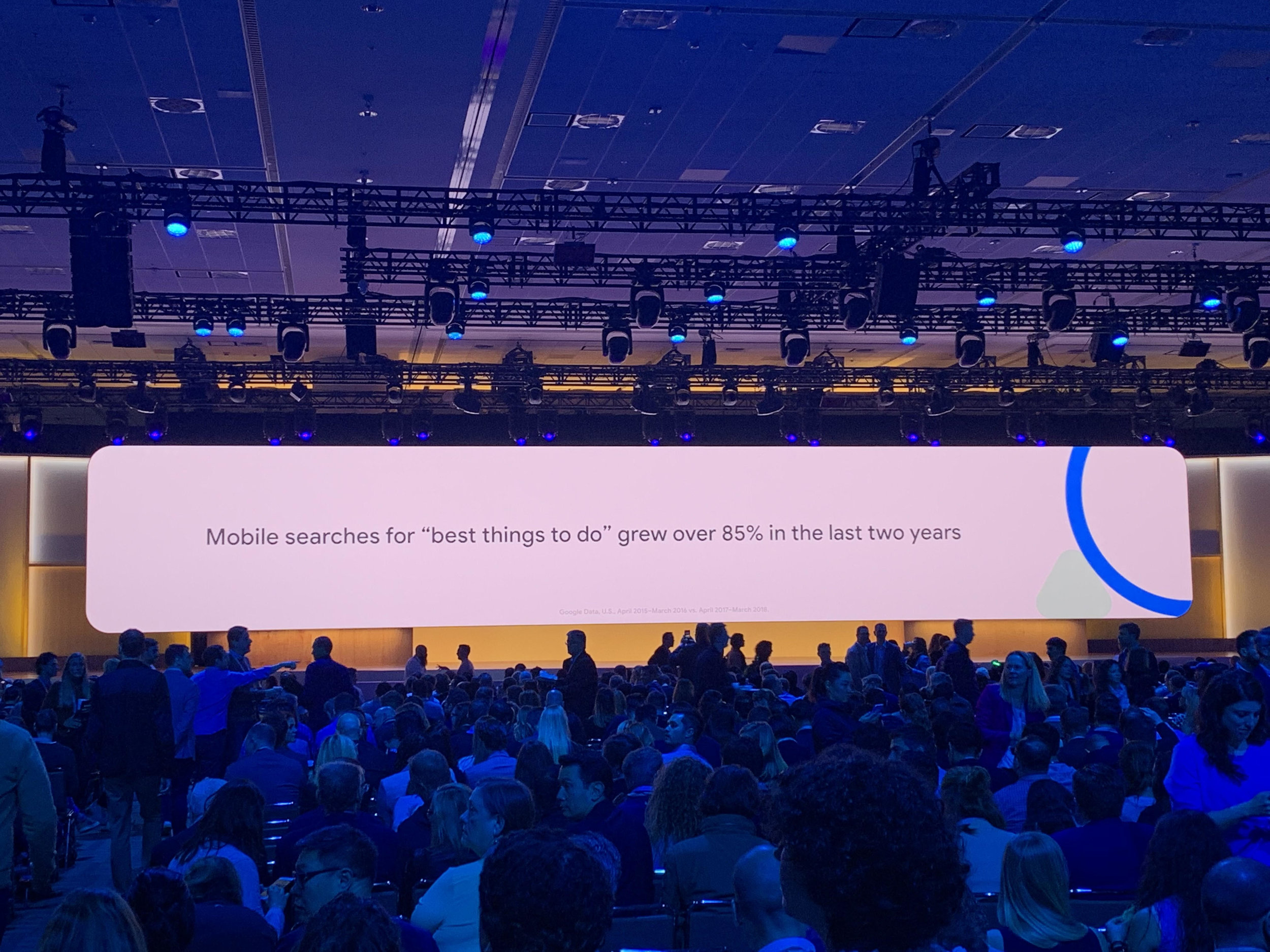
Google Marketing Live is an annual invite-only event that Mason Interactive is proud to be part of. Last week, we travelled to San Francisco for the two-day event to learn about Google’s new ad products and how we can utilize them to reach customers in more enriching and assistive ways throughout their journey.

The journey of Paid Search marketing has been an exciting one with more automated ad units coming into the picture even as we are writing this blog post. 20 years ago we only had text ads that were difficult to personalize, but thankfully, Google makes an effort to always put the customer first.

Let’s review a few new product announcements that will help enhance our strategies in the very near future.

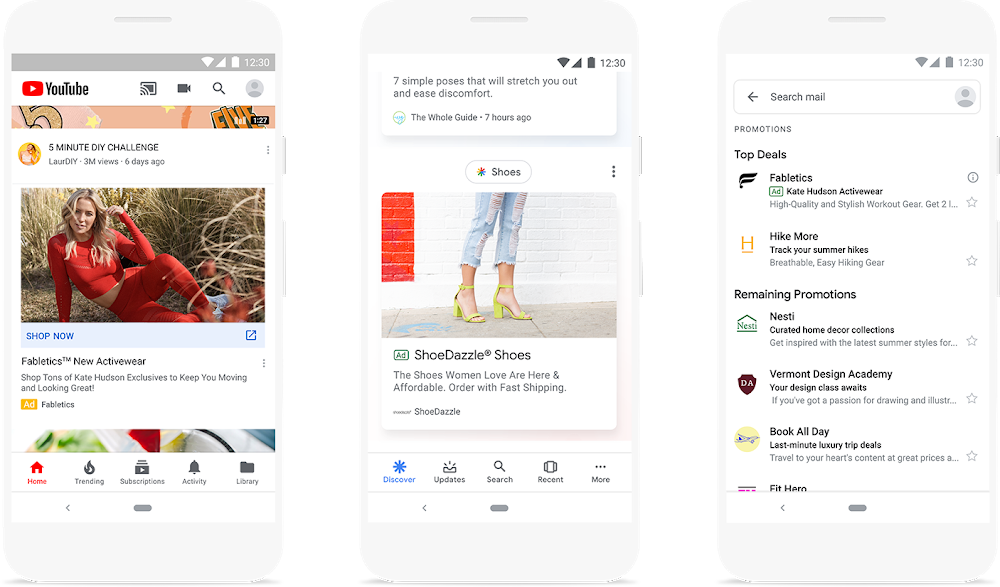
Discovery Ads

People are willing to interact with new information that they find interesting and valuable. Google is now claiming that they can anticipate this interest and openness to discovery, which allows marketers to reach consumers with rich and relevant creatives to make brand introductions. Qualified and performance-based awareness brings value to customers and marketers alike.

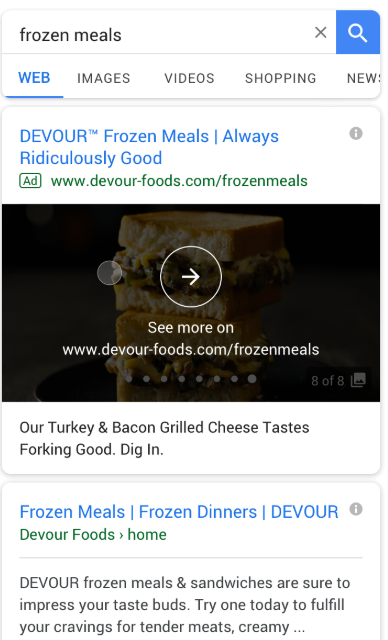
Gallery Ads

Everyone knows carousels from Instagram, but they never come to mind when thinking about Paid Search or the text heavy environment of traditional SERP. Gallery Ads is Google’s newly introduced ad format that should be combined with an optimal rotation of both expanded (ETA) and responsive (RSA) search ads. Advertisers and brands can upload up to eight images that users will be able to swipe through and click to expand for a more immersive experience. We see these being a great addition to fashion brands’ strategy, where we can reach a broader set of keywords with more enriching & assistive visual experiences.

Let’s talk more about Google Marketing Live and how you can apply these new customer experiences to your marketing strategy.